Buyer guide
Cannula Sizes and Colours: 5 Gauges Explained Simply
Ever stood over the cannula tray wondering which of the cannula sizes and colours is the one you want? You are not alone. This guide settles it in a few minutes, so keep it open on your phone for the next busy shift.
Updated October 2026. Sternmed Afrika stocks winged IV cannulas with an injection port in 16G, 18G, 20G, 22G and 24G. Stock lands in Nairobi on 27 November 2026 and every gauge is quote only until then.
The guide covers the chart of cannula sizes and colours, which gauge suits which patient and why Kenya calls the whole thing a branula. At the end you will see how to order every size in one message.
What do the cannula colours mean?
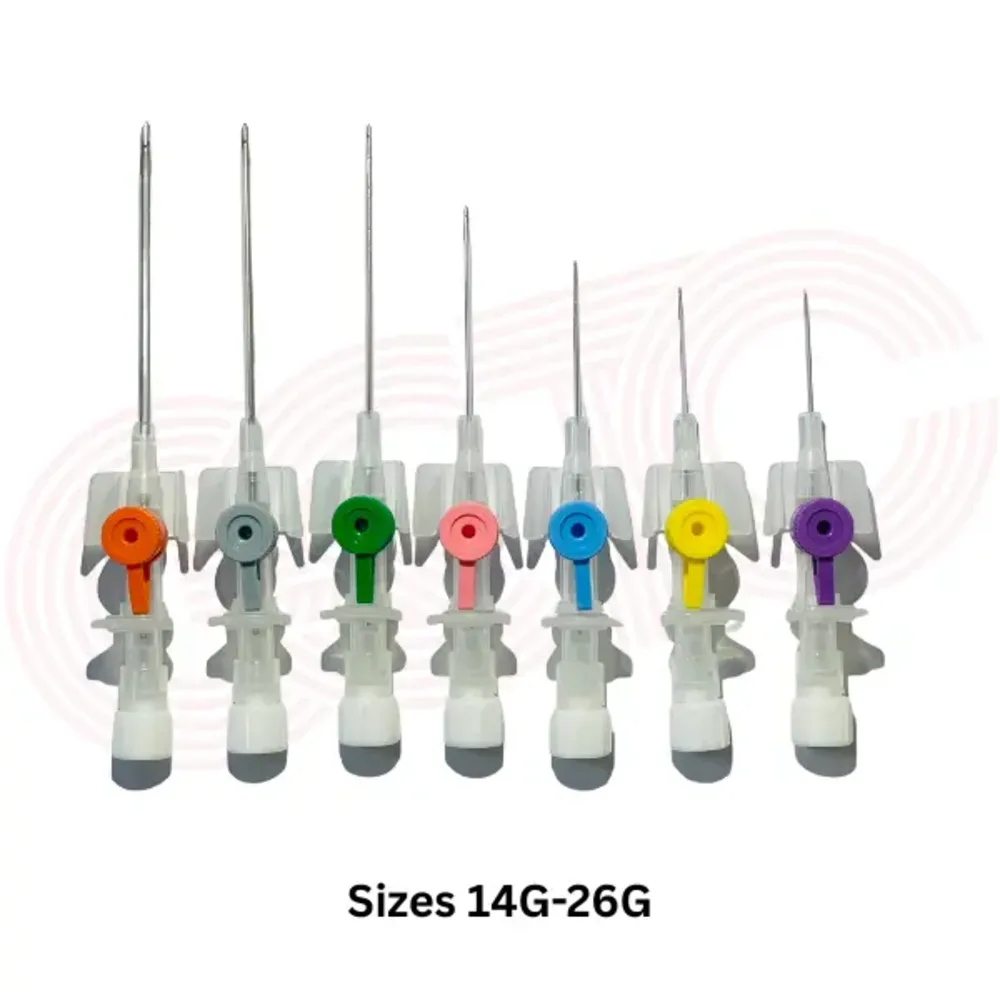
Each colour stands for one gauge. The gauge is the outside diameter of the cannula tube. The rule to remember is simple: the bigger the gauge number, the thinner the cannula.
The colour code is international. It follows a standard published by the International Organization for Standardization, so a pink cannula in Nairobi is the same gauge as a pink cannula in London or Mumbai. That is why nurses talk in colours rather than numbers.
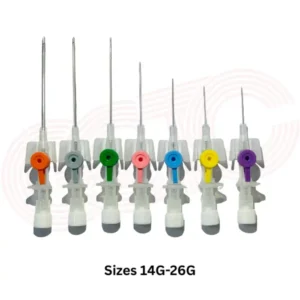
Here is the chart of cannula sizes and colours for the five gauges Sternmed stocks. Two neighbouring gauges are added for context, because you will see them in some hospitals.
| Gauge | Colour | Relative bore | Typical use | Sternmed stock |
|---|---|---|---|---|
| 14G | Orange | Largest | Major trauma and rapid transfusion in theatre | Not stocked |
| 16G | Grey | Very large | Trauma, surgery, fast fluids and blood | Yes, from 27 Nov 2026 |
| 18G | Green | Large | Blood transfusion, surgery, labour ward, casualty | Yes, from 27 Nov 2026 |
| 20G | Pink | Medium | Everyday adult fluids and most drugs | Yes, from 27 Nov 2026 |
| 22G | Blue | Small | Older adults, small veins, children, slow infusions | Yes, from 27 Nov 2026 |
| 24G | Yellow | Very small | Infants, newborns and very fragile veins | Yes, from 27 Nov 2026 |
| 26G | Violet | Smallest | Premature babies and neonatal units | Not stocked |
Print this chart of cannula sizes and colours and tape it inside the treatment room cupboard. New staff learn it in a week. Students stop asking after a day.
One caution on the chart. Colours are set by standard, but typical uses are a guide and not a rule. Your ward policy and the patient in front of you always come first.
Cannula sizes and colours explained one gauge at a time
Grey is the 16G. It is the cannula you want when a patient is bleeding and you need litres in fast. It needs a big, straight vein, usually in the forearm or the antecubital fossa.
Green is the 18G. Many surgical and maternity wards use it as their default because it carries blood as well as fluids. It still needs a decent vein, so it is not the first pick for a frail patient.
Pink is the 20G. This is the workhorse of adult medicine in Kenya. It takes maintenance fluids, antibiotics and most intravenous drugs without trouble.
Blue is the 22G. Pick it for older adults, for small hand veins and for children. It is kinder to the vein and still gives a steady flow for most treatments.
Yellow is the 24G. It is the newborn and infant size and also suits adults whose veins are very fragile. Flow is slow, so it is not for resuscitation.
Why does flow change with cannula sizes and colours?
Flow through a tube rises sharply as the bore widens. A small step up in diameter gives a big jump in how much fluid passes each minute. That is why a grey 16G delivers many times the flow of a yellow 24G.
Length matters too. A longer cannula of the same gauge flows more slowly than a short one. Most ward cannulas are a similar length, so gauge is the number that counts in practice.
Each manufacturer prints its own flow rate on the pack because wall thickness differs between brands. Read the pack rather than a chart when you need an exact figure. Our guide to cannula sizes and colours gives you the order of the gauges, which is what you need at the bedside.
Which cannula size is used for blood transfusion?
Blood is thicker than saline. Push it through a narrow cannula and the cells can be damaged and the flow becomes very slow. For that reason most adult transfusions run through an 18G green or a 16G grey.
A 20G pink is acceptable for a slow adult transfusion when a bigger vein cannot be found. In children, blood is often given through a 22G blue or a 24G yellow at a slower rate. The transfusion set itself has a filter and is a different product from a plain giving set.
If your ward transfuses often, keep more green cannulas in the tray. Our 18G, 20G and 22G cannulas page lets you order all three adult sizes together.
Which cannula sizes and colours suit children and older patients?
Children have small veins that roll and collapse easily. The 24G yellow is the first choice for babies and the 22G blue for older children. Warm the limb, use good light and secure the wings well, because a child moves.
Older patients bring a different problem. Their veins are often visible but fragile and the skin tears easily. A 22G blue placed gently in the forearm usually lasts longer than a larger cannula that blows the vein.
Patients on chemotherapy, dialysis or long term treatment also need vein care. Use the smallest cannula that will do the job and rotate sites. The 16G and 24G cannulas page covers both ends of the range for these special cases.
Is branula the same as an IV cannula?
Yes. Branula began as a brand name and became the everyday word in Kenya for any peripheral IV cannula. Nurses say branula, suppliers list branula and patients ask for a branula, yet they all mean the same winged cannula with a port.
When you buy, do not worry about the word. Worry about the gauge, the colour and the features. A branula 22G blue is simply a 22G IV cannula in a blue hub.
Cannula sizes and colours do not change with the name. A green branula is 18G whether the box says branula, cannula or catheter. If a seller’s colour does not match the chart above, ask questions before you buy.
How to read the box: cannula sizes and colours in print
Every box carries the same three facts. The gauge, written as 18G or G18, plus the length in millimetres. Then the colour band, printed to match the hub inside.
Some boxes also print a flow rate in millilitres per minute. Treat it as that brand’s figure for that length. Another brand’s 20G may differ a little because wall thickness is not identical.
Look for the sterilisation method, the lot number and the expiry date as well. If any of these is missing, the box is not one to put in your tray. The chart of cannula sizes and colours tells you what you should see and the box must agree with it.
Cannula sizes and colours for common ward situations
A labour ward admits a mother in good health. Many units place an 18G green in case blood is needed quickly later. If her veins are small, a 20G pink is a fair compromise.
A medical ward admits an elderly man with pneumonia for antibiotics. A 22G blue in the forearm will carry his drugs and fluids and treat his vein kindly. There is no need for anything larger.
Casualty receives a road accident victim with a falling blood pressure. Two large cannulas go in, a 16G grey and an 18G green, one in each arm. Speed of flow is the whole point here.
A newborn unit admits a baby who cannot feed. A 24G yellow in the hand or scalp vein carries fluids and antibiotics. The nurse secures it with care because the vein is tiny.
Four patients, four of the cannula sizes and colours. None of these choices is a rule carved in stone, but each shows how the chart turns into a decision at the bedside.
What features should a good cannula have?
Wings are the first feature. Two flat wings let the nurse hold the cannula steady during insertion and give tape a wide surface afterwards. A winged cannula stays in place longer.
An injection port is the second. The port sits on top of the hub and takes a syringe for bolus drugs without disconnecting the line. Fewer disconnections mean less infection risk and less air in the line.
A sharp, well ground needle is the third. It should pierce the skin cleanly and slide back smoothly once the cannula is in the vein. Every Sternmed cannula has wings and a port, in all five of the cannula sizes and colours we stock.
How many of each size should a ward keep?
The mix depends on your patients. An adult medical ward is mostly pink and blue, while a surgical or maternity ward adds plenty of green. A children’s ward is yellow and blue with almost no grey.
A simple starting stock for a 20 bed general ward is three boxes of 22G, three of 20G, two of 18G and one each of 16G and 24G. Watch what runs out first and adjust the next order. Within two months your tray will match your real caseload.
Keep the chart of cannula sizes and colours next to the stock card. When a box runs low, anybody can read the colour, find the gauge and write the reorder correctly.
Mistakes to avoid with cannula sizes and colours
- Choosing the biggest cannula by habit. A 16G in a frail arm blows the vein and wastes the cannula.
- Choosing the smallest by habit. A 24G will not keep up with fluid resuscitation in an adult.
- Trusting the colour without reading the box. Check that the hub colour and the printed gauge agree.
- Using a cannula past its expiry date. The seal and the sharpness both degrade.
- Leaving a cannula in too long. Follow your ward policy on dwell time and site checks.
A short refresher on cannula sizes and colours at a staff meeting fixes most of these. The chart above is a free handout for that session.
How to store cannulas so the colours stay honest
Heat and damp are the enemies of a sterile pouch. Store boxes in a cool, dry cupboard away from the autoclave and the window. Keep them off the floor so a mop never reaches them.
Arrange the tray by colour from grey to yellow, left to right. The eye finds the right cannula faster and the tray is restocked without mistakes. A tray sorted by cannula sizes and colours is also easier to count at the end of a shift.
Write the expiry month on the end of each box and rotate so the oldest box sits in front. A wasted box is money gone. A cannula past its date is a risk nobody needs.
Count the tray once a week against the stock card. Note which of the cannula sizes and colours moves fastest and which sits still. That record is the best guide to your next order and it stops the one gauge you need most from running out on a Sunday night.
Where can I buy every size in one order in Kenya?
Sternmed Afrika in Nairobi stocks all five common gauges. We sell retail and wholesale, so a home carer who needs one box and a hospital that needs a pallet both get a quick quote. Stock lands on 27 November 2026 and can be reserved today.
Browse the IV access range for both cannula pages. For prices by gauge, read our IV cannula price in Kenya guide, which lists market ranges with sources.
Ordering is easy. Send the gauge, the number of boxes and your delivery town on WhatsApp at +254 799 526972 or by email to info@sternmedafrika.com. Pay by M Pesa or cash on delivery.
We deliver across Kenya from Nairobi and export across Africa on request. If you want help choosing between two cannula sizes and colours for your patients, say so in the message. We will answer plainly.
Why one supplier for all cannula sizes and colours saves time
Buying grey from one seller and yellow from another means two invoices, two deliveries and two sets of batch numbers. Mixing brands also means mixing flow rates and pouch styles on the same tray. Staff notice and so do audits.
One supplier for all five cannula sizes and colours gives one brand, one invoice and one phone number when something needs sorting out. Reordering becomes a single message each month. Sternmed was set up to be that one number for clinics in Kenya.
If you already have a supplier you trust, keep them and compare our quote on your next order. A fair comparison is all we ask. Send the same list to both and see who answers faster and clearer.
A quick tool for the bedside
Our free nurse tools page has a short cannula size picker. Choose the patient type and it suggests a gauge and colour. It sits beside a drip rate calculator and a Foley size guide.
The tool is a pocket version of this guide to cannula sizes and colours. Use the tool for a fast answer and come back here when you want the reasons behind it.
Questions buyers ask about cannula sizes and colours
Which cannula colour is 22G?
Blue. The 22G blue cannula suits older adults, small veins and children.
Which cannula colour is 18G?
Green. The 18G green is the usual adult transfusion and surgical size.
What is the most common cannula size for adults?
The 20G pink for everyday fluids and drugs, with the 22G blue close behind.
Which cannula size is used for babies?
The 24G yellow for most infants and newborns. Premature babies may need a 26G violet, which Sternmed does not stock.
Are cannula sizes and colours the same in every country?
Yes. The colour code follows an international standard, so a grey cannula is 16G everywhere.
Is a branula different from a cannula?
No. Branula is the everyday Kenyan word for an IV cannula. The gauges and colours are the same.
Which sizes does Sternmed stock?
16G grey, 18G green, 20G pink, 22G blue and 24G yellow, all with wings and an injection port. Stock lands on 27 November 2026.
How do I order?
WhatsApp +254 799 526972 or email info@sternmedafrika.com with the gauge and quantity. Pay by M Pesa or cash on delivery.
Order today
Need every one of the cannula sizes and colours above in one delivery? Send your list on WhatsApp at +254 799 526972 or email info@sternmedafrika.com. You will get one quote and a reserved slot for the 27 November 2026 shipment.
This guide is by Sternmed Afrika, a medical consumables supplier in Nairobi. We sell retail and wholesale, deliver across Kenya and export across Africa on request.