Buyer guide
Feeding Tube Price in Kenya 2026 With an Infant Size Guide
Running a newborn unit and tired of guessing the feeding tube price in Kenya from a classified advert and an overseas shop? This page was written for you. It gives the market range per tube and per pack, a plain size guide from 5FG to 8FG and a simple way to order.
Updated October 2026. Market prices were read on the linked pages in October 2026 and can change without notice.
Sternmed Afrika supplies infant feeding tubes in 5FG to 8FG. Stock lands in Nairobi on 27 November 2026 and the tubes are quote only until then. Below you will find the feeding tube price in Kenya, which size suits which baby and how many tubes a unit really uses.
How much is a feeding tube in Kenya in 2026?
On market listings seen in October 2026, a single infant feeding tube costs between KSh 20 and KSh 35. A pack of 50 costs between KSh 900 and KSh 1,350, which is KSh 18 to KSh 27 a tube. That is the whole spread of the feeding tube price in Kenya from supplier pack to pharmacy counter.
The table links every figure to the page it was read on. Sternmed prices are set and published on 27 November 2026 when stock lands. Until then we quote per order.
| Item | Market price (Oct 2026) | Per tube | Source | Sternmed |
|---|---|---|---|---|
| Feeding tubes, pack of 50, 4FR to 18FR | KSh 900 to KSh 1,350 | KSh 18 to KSh 27 | market listing | Quote only until 27 Nov 2026 |
| Infant feeding tube, 4FG to 10FG, single | KSh 35 | KSh 35 | market listing | Quote only until 27 Nov 2026 |
| Feeding tube size 16, single | KSh 25 | KSh 25 | market listing | Not stocked |
| Feeding tubes, sizes 4 to 10, single | KSh 20 | KSh 20 | market listing | Quote only until 27 Nov 2026 |
For budgeting, use KSh 20 to KSh 27 per tube when buying by the pack and KSh 25 to KSh 35 for a single tube. The feeding tube price in Kenya is one of the lowest lines in a newborn unit budget. Volume, not unit price, is what adds up.
Why the feeding tube price in Kenya is hard to find
Search for the feeding tube price in Kenya and you get a classified advert, a few product pages with no description and shops in other countries. Search for an NG tube price and you get almost no Kenyan seller at all. The information is thin because the product is cheap and sellers do not bother to explain it.
That leaves newborn units and parents guessing. A nurse in charge should not have to phone four suppliers to learn that a tube costs about KSh 25. This page exists to save that hour.
We will update it when Sternmed stock lands on 27 November 2026 and our own prices are set. The date at the top tells you when it was last checked.
Which feeding tube size suits a newborn?
Size matters more than the feeding tube price in Kenya, so here is the scale in plain words. Feeding tubes use the French scale, written FG, FR or Fr, where the number is the outside circumference in millimetres and dividing by three gives the diameter. A 6FG tube is about 2 mm across.
Smaller babies take smaller tubes. Many units use 5FG or 6FG for small or premature babies and 8FG for term babies who need more milk at each feed. The clinician chooses the size for each baby, using weight, the feed volume and the thickness of the feed.
| Size | Outside diameter | Usual use | Sternmed stock |
|---|---|---|---|
| 5FG | About 1.7 mm | Very small and premature babies | Yes, from 27 Nov 2026 |
| 6FG | 2.0 mm | Small babies and most premature infants | Yes, from 27 Nov 2026 |
| 8FG | About 2.7 mm | Term babies and larger infants | Yes, from 27 Nov 2026 |
| 10FG and above | 3.3 mm and above | Older children and adults | Not stocked |
The size changes the feeding tube price in Kenya very little. On the listings above, a 5FG and an 8FG from the same seller cost the same. Stock the sizes your babies need and let the price look after itself.
NG tube or feeding tube: is there a difference?
Not really. A nasogastric tube, or NG tube, goes through the nose into the stomach, while an orogastric tube goes through the mouth. Both are feeding tubes and the same tube can usually be placed either way.
In Kenya most nurses say feeding tube and most import papers say nasogastric tube. Suppliers list the product under several names. When you compare the feeding tube price in Kenya, you are comparing the same product whatever the label says.
What differs is length and markings. Infant tubes are shorter and have depth marks so the nurse can check position. Adult NG tubes are longer and wider and are not what a newborn unit needs.
Feeding tube price in Kenya per baby, not per tube
The figure a unit manager needs is the cost per baby per week. A baby on tube feeds with a change every three days uses two or three tubes a week. At KSh 20 to KSh 27 a tube that is KSh 40 to KSh 80 a week.
Set that against the cost of the milk, the syringes and the nurse’s time and the tube is the smallest line. Chasing the very cheapest tube rarely pays. A tube with a rough tip or a leaking connector costs a replacement and a distressed baby.
Pay a fair feeding tube price in Kenya for a tube that works every time. Save where it is real, on pack size and on combining the order with your other ward items.
What makes a good infant feeding tube?
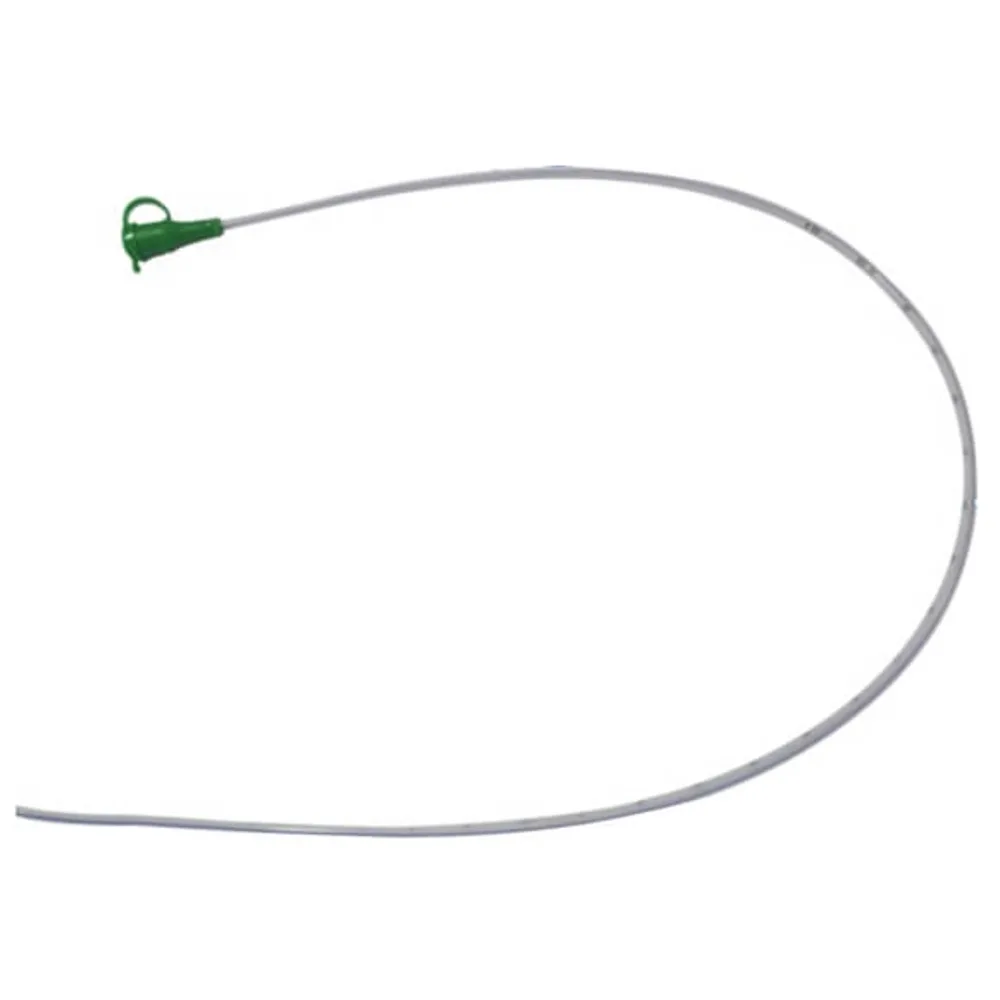
A soft, smooth tube that will not harm a tiny nostril. A rounded, closed tip with side eyes so milk flows out gently. Clear depth markings along the tube so placement can be checked and recorded.
A standard connector that fits an ordinary syringe without leaking. A cap on the connector to close the tube between feeds. A radio opaque line so the tube shows on an X ray if position needs confirming.
Check all of these when a sample arrives, because the feeding tube price in Kenya tells you nothing about the tip or the markings. The Sternmed infant feeding tube page lists what our tube offers.
How many tubes does a newborn unit use?
Count the babies on tube feeds and the change schedule. A tube is changed on the unit’s schedule, often every few days, plus whenever it blocks or is pulled out. A busy unit with ten babies on tube feeds may use 80 to 120 tubes a month.
At the market feeding tube price in Kenya of KSh 20 to KSh 27 a tube, that is KSh 2,000 to KSh 3,200 a month. Two packs of 50 cover a typical month with a small reserve. A smaller unit may need one pack every six weeks.
Keep a mix of sizes. A common split is half 6FG, a third 8FG and the rest 5FG. Adjust after two months when you see which size runs out first.
Premature babies and the feeding tube price in Kenya
Preterm birth is common in Kenya and across Africa. The World Health Organization sets out the scale of it in its preterm birth fact sheet. Many of these babies cannot suck well at first and are fed by tube until they can.
That is why the 5FG and 6FG sizes matter so much. A unit that cares for premature babies uses more small tubes and changes them carefully. The feeding tube price in Kenya for these sizes is the same as for 8FG, so stock enough of them.
Tube feeding is a bridge to breastfeeding. Mothers’ expressed milk is given through the tube until the baby can feed at the breast. Good tubes, used well, shorten that bridge.
Retail or wholesale: which feeding tube price in Kenya is yours?
A parent discharged with a baby on tube feeds buys a few tubes at a time. That is a retail purchase and the single tube price applies. A chemist that sells a handful a month buys the same way.
A newborn unit, a children’s ward or a hospital pharmacy buys by the pack of 50 or by the carton. That is wholesale and the price per tube falls. Sternmed quotes by quantity, so the more tubes on one quote, the lower the figure.
Pharmacies that resell tubes can look at the table above. Buy at the pack end, sell at the single end and the margin is clear. We never ask what you plan to do with the order.
What to check before you accept a delivery
- Sealed sterile pouch with the size printed clearly.
- Depth markings visible along the tube.
- Rounded, closed tip with side eyes.
- Connector that fits a standard syringe and has a cap.
- Expiry date at least a year away.
Open one tube from a new carton and flush it with water from a syringe. Water should flow freely from the side eyes with no leak at the connector. A tube that leaks goes back, whatever the feeding tube price in Kenya was.
Storage and shelf life
Tubes are light and easy to crush. Store the boxes on a shelf rather than the floor and do not stack heavy items on them. A kinked tube may not straighten and can block.
Keep them cool, dry and out of the sun. Write the expiry month on the box end and use the oldest box first. A tube thrown away for expiry adds to your real feeding tube price in Kenya.
Label each size clearly. A nurse on a night shift should find a 6FG without opening three boxes. Mixed boxes lead to the wrong size being opened and wasted.
Going home with a feeding tube
Some babies leave hospital still on tube feeds. The parents are taught to check the tube, give the feed and flush it. They also need to know where to buy tubes when the ones from the hospital run out.
Give them the size written down and a supplier’s number. A parent should not have to learn the feeding tube price in Kenya by phoning around with a baby in one arm. Sternmed sells retail, so a parent can order a few tubes on WhatsApp and pay on delivery.
Tell them to keep two spare tubes at home at all times. A tube that comes out at midnight is replaced calmly when a spare is in the drawer.
Safe placement and feeding basics
Technique protects the baby and the budget alike, whatever feeding tube price in Kenya you paid. Placement is a clinical skill taught on the unit, where you measure the depth, pass the tube gently, confirm position by your unit’s method and record the mark at the nostril or lip. Check the position again before every feed.
Give feeds slowly by gravity or syringe as the plan states. Flush the tube with a small amount of water or milk after each feed to stop it blocking. Cap it between feeds.
A tube that blocks is replaced, which costs a tube and a nurse’s time. Good technique keeps your real feeding tube price in Kenya low in a way no supplier discount can match.
How do I order Sternmed infant feeding tubes?
Send the sizes, the quantity and your delivery town. We reply with a written quote and reserve your tubes against the 27 November 2026 shipment.
- WhatsApp +254 799 526972 with sizes and quantities.
- Or email info@sternmedafrika.com.
- Or use the request a quote page.
- Confirm the quote and your tubes are reserved.
- Pay by M Pesa or cash on delivery when the order arrives.
Browse the enteral feeding range and add cannulas, giving sets or underpads to the same order. One delivery means one delivery charge.
We deliver across Kenya from Nairobi and export across Africa on request. The feeding tube price in Kenya on your Sternmed quote includes delivery to your town, so the figure you see is the figure you pay.
Delivery across Kenya
Orders within Nairobi go out quickly once stock is on hand. Orders to other counties travel by courier and reach most towns within a few days. Tell us your town and we include delivery in the written quote.
Hospitals outside Kenya can order too. We export across Africa on request and quote freight to your city. Newborn units often combine feeding tubes with 24G cannulas and nebulizer masks in one shipment to spread the freight cost.
A sample order for a small newborn unit
A unit with six babies on tube feeds might order one pack of 50 in 6FG, one pack of 50 in 8FG and 20 tubes in 5FG. That covers a typical month with a reserve for the small babies who arrive without warning.
At the market feeding tube price in Kenya above, that order costs about KSh 2,500 to KSh 3,300. Send the same list to us and to your current supplier and compare the written quotes line by line, including delivery.
Who buys feeding tubes from Sternmed?
Newborn units in county and mission hospitals. Private maternity hospitals and children’s wards. Pharmacies near hospitals that serve parents going home with a baby on tube feeds.
Each buyer sends sizes and quantities and gets a written quote. The feeding tube price in Kenya we offer is the same honest figure for everyone, falling only with quantity. For other ward items, see our medical consumables price list.
Questions buyers ask about the feeding tube price in Kenya
What is a fair feeding tube price in Kenya for one tube?
KSh 20 to KSh 35 for a single infant tube and KSh 18 to KSh 27 each in a pack of 50, based on market listings seen in October 2026.
Which feeding tube size is used for a newborn?
Many units use 5FG or 6FG for small and premature babies and 8FG for term babies. The clinician chooses for each baby.
What does FG mean?
French gauge. Divide the number by three to get the outside diameter in millimetres. A 6FG tube is 2 mm across.
Is an NG tube the same as a feeding tube?
Yes. A nasogastric tube is a feeding tube passed through the nose. The same infant tube can be passed through the mouth.
Which sizes does Sternmed stock?
Infant feeding tubes in 5FG to 8FG. Stock lands in Nairobi on 27 November 2026.
Can a newborn unit order a mix of sizes?
Yes. Send the quantity for each size and you get one quote for the whole order.
Can a parent buy a few tubes?
Yes. Sternmed sells retail and wholesale, so a small order is welcome.
How do I pay?
Pay by M Pesa or cash on delivery. We deliver across Kenya and export across Africa on request.
Order today
Want a written feeding tube price in Kenya for your newborn unit, ward or pharmacy? Send sizes, quantities and your town on WhatsApp at +254 799 526972 or email info@sternmedafrika.com. You will get a quote and a reserved slot for the 27 November 2026 shipment.
This guide is by Sternmed Afrika, a medical consumables supplier in Nairobi. We sell retail and wholesale, deliver across Kenya and export across Africa on request.
Products in this guide