Buyer guide
What Are Bed Pads? Underpads, Bed Liners and Chux Explained
So what are bed pads when one plain white sheet goes by seven different names across the world?
Below we explain what are bed pads in plain words so you buy the right one fast. We also list every name this same pad carries from Nairobi to London.
What are bed pads in one line
Here is the short answer to what are bed pads. They are soft sheets you place on a bed to soak up urine, blood or any spill so the mattress stays dry. One pad saves you from washing sheets at 3am.
Think of a bed pad as insurance for the mattress and for your sleep. It sits quietly under the hips where leaks happen most. When morning comes you lift it off and the bed underneath is still dry.
People who ask what are bed pads are usually caring for someone at home or shopping for a ward. You want a pad that holds a lot and feels gentle on the skin. That is the whole idea.
The honest truth about what are bed pads is that the product is simple but the choice is not. Get the layers and the size right and the rest is easy.
What are bed pads made of
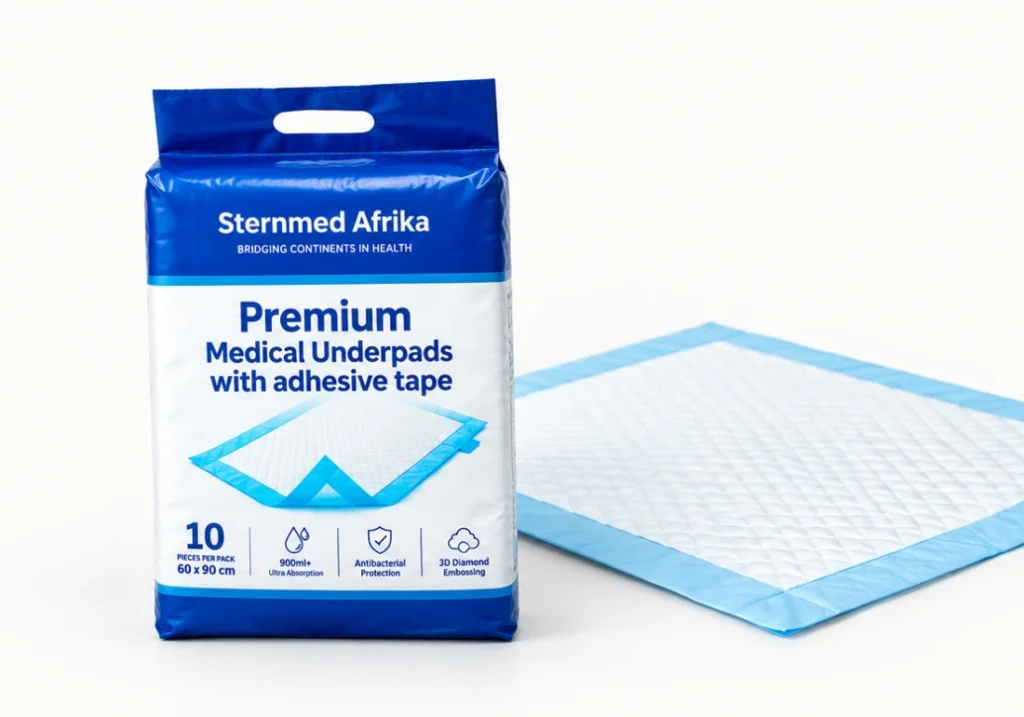
When buyers ask what are bed pads made of, they picture one flimsy sheet. In truth a good pad has four clear layers that work as a team. Each layer has one job.
The top is a soft layer that sits on the skin and pulls wetness away fast. Under it sits an absorbent core that locks liquid in so it does not flow back. A good core holds 900 ml and more.
The core is the heart of the pad and it is where cheap copies cut corners. A strong core turns liquid into gel and holds it even under body weight. That is how a good pad gets through a full night without a leak.
The base is a waterproof back that stops any leak reaching the mattress. Some pads add adhesive tape on the back so the pad stays put on the bed. The common size is 60 x 90 cm, wide enough for most beds.
So the real answer to what are bed pads made of is simple. Soft top, thirsty core, waterproof base and a size that fits. Our medical underpads in Kenya follow this exact build.
The many names for the same pad
This is where most people get stuck. The same pad has a different name in almost every shop and every country. Knowing the names helps you search and compare like for like.
Why does one product carry so many names? Each trade and each country grew its own word over the years. The good news is that the pad inside the packet is the same, so you can buy on quality not on the label.
In Kenya you will hear bed pads, bed liners, underpads, clinical bed pads, incontinence bed pads or mattress protectors. In a hospital a nurse may say clinical bed pad or dressing pad. Buyers abroad use their own words too.
In the United States people say chux or chux pads. In the United Kingdom you hear incontinence bed pads or kylie sheets. In India the common word is dry sheet.
| Where you are | What people call the same pad |
|---|---|
| Kenya, at home | bed pads, bed liners, underpads, mattress protectors |
| Kenya, clinical | clinical bed pads, incontinence bed pads |
| Hospitals | clinical bed pad, dressing pad |
| United States | chux, chux pads |
| United Kingdom | incontinence bed pads, kylie sheets |
| India | dry sheet |
So if a relative abroad asks what are bed pads called there, now you can answer. Chux in New York are the same pad as bed liners in Nairobi. The product is one, the name is many.
Search engines treat all these words as one product too. So a page that names them clearly can show up whether a buyer types bed liners, chux or underpads. That is how one guide reaches the whole world.
What are bed pads used for
Once you know what are bed pads, the uses are easy to picture. At home they protect the bed of a bedridden or elderly person who cannot always reach the toilet. They keep the night calm and the laundry light.
In hospital wards staff lay them under patients after surgery or during long stays. Mothers use them at delivery to catch fluids and keep the bed clean. They also save many a parent when a child wets the bed.
Carers also slip a pad on a favourite chair or a car seat for long trips. Anywhere a spill would ruin a surface, a bed pad earns its place.
So what are bed pads in daily life? They are the small helper that keeps beds, chairs and car seats clean and dry.
Clinics and maternity homes keep bed pads near the labour room for quick changes. A fresh pad after each delivery keeps the next mother comfortable. Small homes and big wards both lean on the same simple sheet.
You can read more on managing leaks in this guidance on urinary incontinence. A pad is a simple tool that gives back dignity and sleep. That is why wards and homes keep a stack ready.
What size are bed pads
Size is the next thing people check after they learn what are bed pads. In Kenya the common size is 60 x 90 cm. That covers the middle of a bed where most spills land.
A 60 x 90 cm pad suits a single bed, a hospital bed or the hips area of a larger bed. For a big double bed you can lay two pads side by side. Bigger is not always better, placement matters more.
Disposable or washable bed pads
There are two main types and both answer what are bed pads for daily care. Disposable pads are used once then thrown away, which is clean and quick for busy wards. They shine when hygiene and speed matter most.
Washable pads are cloth based and you wash and reuse them many times. They cost more up front but can work out cheaper over months. Many homes keep both, disposable for travel and washable for the daily bed.
Good pads also cut your laundry bills and save water over a month. For a family caring for one person, that saving adds up fast.
Our incontinence care range focuses on strong disposable pads that hold a lot. They are the easy pick for most homes and clinics.
How to choose a bed pad
Choosing is simple once you know what are bed pads meant to do for you. The pad has to hold enough, fit the bed and feel soft on the skin. A weak pad leaks and wastes money.
Run this quick checklist before you pay for any pad.
- Absorbency of 900 ml and more so the bed stays dry all night.
- Size of 60 x 90 cm, which fits most beds in Kenya.
- A soft top sheet that is kind to fragile skin.
- A true waterproof back that will not crack or leak.
- A fair price per pad when you buy in bulk.
If you still wonder what are bed pads worth buying, pick a known medical grade pad over a thin market copy. Cheap pads feel fine until the first heavy night. Quality pays you back in dry mornings.
How many bed pads you need
A fair question that follows what are bed pads is how many to keep at home. For one adult with regular needs, plan for three to five pads a day. That covers day changes and the longer night stretch.
So a week runs close to 25 to 35 pads for steady home care. Buying a bale of 10 packets keeps you stocked for weeks. Running out at night is the one thing you want to avoid.
Homes that plan ahead rarely face a 3am scramble. Keep a spare packet in the cupboard and reorder when you open the last one. Steady stock is the quiet secret of calm home care.
What bed pads cost in Kenya
Now the part everyone asks after what are bed pads, the price. A packet of 10 pads costs KSh 800. A bale of 100 pads costs KSh 8,000, which works out to KSh 80 a pad.
We keep one size and one quality so the price stays steady. Every packet you open feels the same as the last. That is how you plan a budget for a month of care with no surprises.
Buying the bale is the smart move for any home or ward on steady care. You pay less per pad and you never run short. See the full price list for other consumables.
We hold stock in Nairobi and ship the same day you order. We deliver across Kenya and export across Africa on request. So you get your pads fast, wherever you are.
Questions buyers ask about what are bed pads
Free planner
How many bed pads do you need?
Prices: KSh 800 a packet of 10, KSh 8,000 a bale of 100. Delivery cost depends on your town.
What are bed pads in simple words?
The simple answer to what are bed pads is soft sheets you lay on a bed. They soak up urine, blood or spills so the mattress stays dry. One pad can save a full change of sheets.
What are bed pads called in other countries?
The same pad carries many names. In the United States it is chux, in the United Kingdom it is kylie sheets or incontinence bed pads, in India it is a dry sheet. In Kenya we say bed pads, bed liners or underpads.
What size are bed pads in Kenya?
The common size is 60 x 90 cm. That fits a single bed or the middle of a larger one. For a wide bed you can lay two pads side by side.
Are bed pads disposable or washable?
Both types exist. Disposable pads are used once then binned, which is fast and clean. Washable pads are cloth and you reuse them, which can save money over time.
How many bed pads do I need in a day?
Once you know what are bed pads, the next step is planning stock. For one adult plan three to five pads a day. A bale of 100 keeps a home ready for weeks.
What do bed pads cost in Kenya?
A packet of 10 costs KSh 800. A bale of 100 costs KSh 8,000, which is KSh 80 a pad. The bale is the cheaper way to buy per pad.
What are bed pads used for at home?
At home they protect the bed of a bedridden or elderly person. They also help a child who wets the bed and a mother after delivery. One pad keeps the night dry and calm.
Where can I buy bed pads fast in Nairobi?
We hold stock in Nairobi and ship the same day you order. We deliver across Kenya and export across Africa on request. Message us and you get a written reply the same working day.
Order today
That is the full answer to what are bed pads, now get yours from Sternmed Afrika. WhatsApp +254 799 526972 or email info@sternmedafrika.com and you will get a written reply the same working day.
This guide is by Sternmed Afrika, a medical consumables supplier in Nairobi. We sell retail and wholesale, deliver across Kenya and export across Africa on request.